

We Don’t Know Who We Are
What is the identity of Toledo and the Rust Belt?

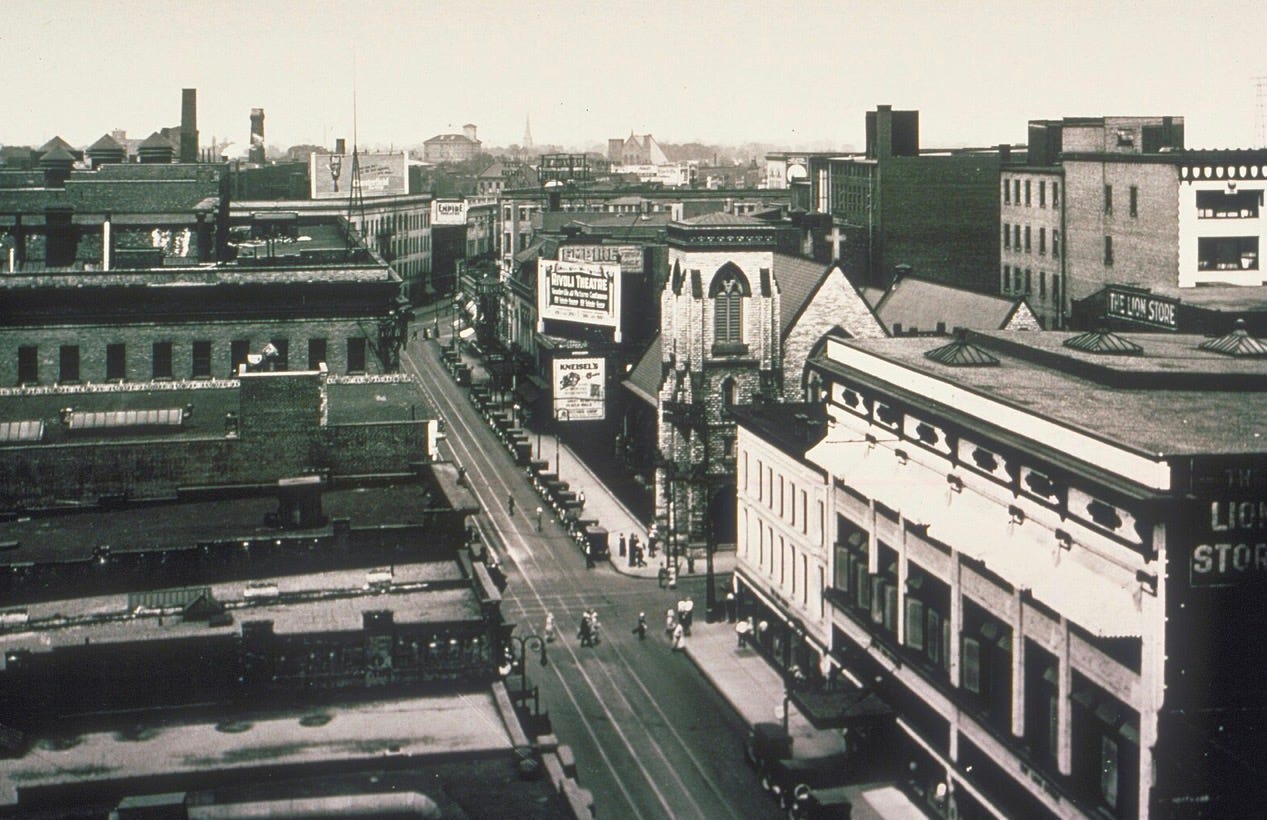
Liminal City—There are very few places that have donegality. Lewis coined that word from his experiences in Donegal as a boy. For a place to have donegality, it knows what it is. It overflows with the isness of what it is.
But what is a Toledoan? What is Toledoness?
A year ago, I listened to a book called We Don’t Know Ourselves by Fintan O’Toole. It’s a book about how Ireland tried to define herself after gaining independence. What disgusted me about the book was O’Toole’s love of Onanism and infanticide. He talked as if they were the solution to the clerical sex abuse scandals. But, what I loved about the book was the title. It was the thesis. Under Éamon de Valera’s leadership, Roman Catholicism was intrinsically tied to life and politics, and it is stark how secular Ireland became in the 21st century. She had been so Catholic. She was an Irish Catholic nationalist country. But despite that Gaelic and religious identity, Ireland still struggled to know what she was and turned more secular than the United Kingdom.
We Don’t Know Ourselves is a fitting title for all of modernity. I write about this topic more than any other at Michigan Enjoyer. This is because I live in a post-industrial region with a dwindling Roman Catholic population. Pentecostalism is taking place of popishness. Membership in the Protestant mainline is dwindling. And, Evangelicals continue to runaway and isolate like they have for decades.
Currently, I’m reading Iain Murray’s Evangelicalism Divided. I greatly enjoyed his Revival and Revivalism as well. I find they pair nicely, along with George Marsden’s Fundamentalism and American Culture. These books have been opened my eyes to why I and other Evangelicals think the way we do. What’s evident in Marsden’s history is Protestants used to have an identity. Even with the rise of liberalism in the mainline Protestant denominations, there was a confidence in their Protestantism. They controlled the institutions of America. They were optimistic. Their identity was the Protestant work ethic and a postmillennialist vision of the future.
Toledoans might be optimistic. But they lack confidence.
By confidence, I mean knowledge of the self. Because I’m Reformed and in Toledo, I’m in a small sect. (I mean actually Reformed, not a dispensationalist and charismatic Baptist who believes in election.) Because of this, I’m assured of the inerrancy of Scripture, the Five Solas, the Apostle’s Creed, the Nicene Creed, and the Westminster Confession of Faith. I’m confident that Presbyterianism is good. And, I’m sad that Presbyterians break up into so many little denominations. I’m even sad that the mainline I never knew has drifted from orthodoxy.
But I don’t know who I am.
What I’ve found is no one does. You talk to a young Toledoan on the street and ask him who he is, he will obviously look at you funny. But it is an important question that we should be asking everyone.
I am confident that Christ is the only hope of salvation, that He is only found in His Word, and that He is the Word. And yet, when it comes to how I am a citizen of my region or a Wing, I don’t know what to think.
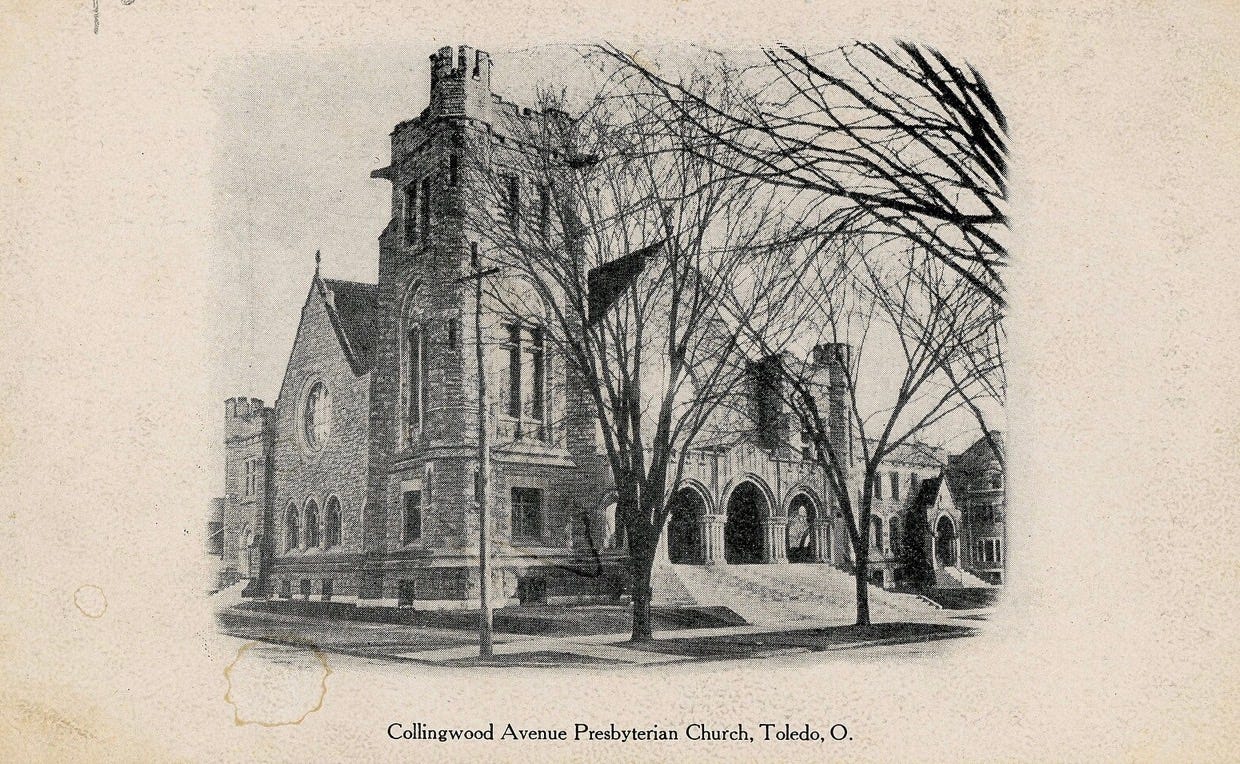
I was born in Harleysville, PA, which is a suburb of Philadelphia and was baptized at Covenant Presbyterian Church. After my father finished residency in Christiana, DE, we moved to Toledo. I was three.
When I travel, I tell people I’m from Toledo because I love that look people throw at me, the one that indicates I must have a hatchet embedded in my forehead. I feel the need to explain myself. I defend why I live where I do. But wrinkled brows meet my words, and I wish I would have just said I was from Grand Rapids.
Other than my Christian faith, I don’t have much of an identity. I don’t know what it means to be an American. I’m trying to be some sort of Toledoan even though I just barely live in Michigan. I’m Reformed and Protestant. Yet Toledo is Catholic and turning charismatic, or to nothing at all.
I’m a Wing, a family that’s been in America since the 1640s. Most of the Wings were Quakers or Congregationalists. But it’s complicated.
My grandfather was adopted at eight months old into the Wing family. He didn’t know he was adopted till he was married and had his own family. His biological mother was French-Canadian, and he never knew who his father was. Today, DNA tests show my grandfather’s father was a Mick. Whether an immigrant or the son of one, I don’t know. I’m still trying to figure out who that man was. I wish I could know why he wanted nothing to do with my grandfather. But either way, the Wing family was good to my grandfather and without him I wouldn’t be whoever I am.
I have a good father. Why would my grandfather’s background matter to me? I could list all the signs in Scripture that God loves genealogies and cares about family lines. I could explain the nuances of God’s grafting in outsiders and defending the fatherless. But I won’t. I care about who my grandfather’s father was for the same reason Elephants travel to see their ancestor’s burial grounds.
As I said, I can recite the creed with assurance. I know it’s true in my bones. I seek to obey before I understand. It’s the question of what is an American? It’s the question of where my grandfather is from? I ask, when is an institutions worth leaving and when do we fight? This is what I mull over.
If a man knows who he is, he will pass on not only a surname, but a calling, to his children who will in turn pass it on, for generations. At least, that’s how it should be. In America, it usually isn’t.
Fundamentalism and American Culture revealed the problem. When the fundamentalists left the mainline denominations, they started their own Bible colleges and other smaller institutions. Places like Wheaton came about, which would mean, fundamentalism really did found Evangelicalism. Conservative evangelicals always run. As a result, there is an identity issue, and we keep crawling back to the Roman Catholics who have confidence.
In Revival and Revivalism, Iain Murray goes further back than Marsden, back before the mainlines went liberal. He speaks of a time when there was Evangelical unity among different denominations after the First Great Awakening. But once the second one came around, the American tendency to split began. Denominations multiplied.
After the mainlines did go liberal, the Protestant security left with the splitting that continued through the 20th century. The conservative Reformed world was especially quarrelsome and it split over everything as John Frame documents in his essay “Machen’s Warrior Children.” As Murray explains in Evangelicalism Divided, in a weird way the pursuit of ecumenism led to even further division.
I’m cradle PCA. Most PCA men I meet were not born Presbyterian. They were usually Roman Catholic or Baptist. Today’s largest conservative Reformed denomination is made up of many who “made a decision” to become Presbyterian. But this is the American way. We’re born in Texas and we die in Maine. We don’t stay in one place. We don’t live generationally. And, this is why we don’t know who we are, even if we start believing in covenant theology.
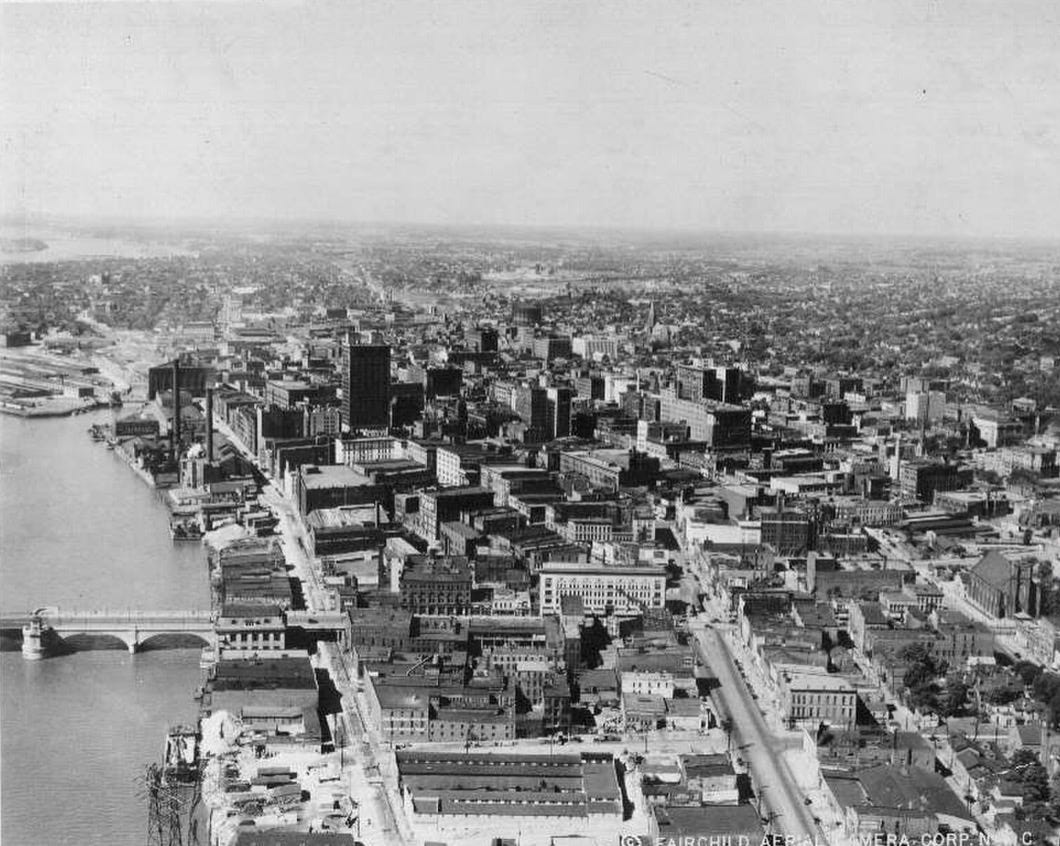
In Toledo, the identity left with the auto industry. The identity of the city, like all of the Rust Belt, was in her manufacturing. Now that auto is gone, what is Toledo? Now that the Roman Catholic parishes are dying out and their cathedrals are going up for sale, what is the religiousness of the city? Time will tell.
Some may wonder why I’m thinking about this. Some might say, “You sound like you’re tempted by Christian Nationalism.” I am as much as any man.
But here’s why I’ve actually been cleansed of that temptation. If you read the history of the battles for identity in the British Isles, the Christian Nationalist agenda reveals itself to be a fools errand. No one agrees. Everyone splinters. Even when you get an honorable man like Cromwell as your leader, the regime only lasts a few years before everyone splits and fights again. If the Christian Prince managed to take over America, there would still be splitting and fighting and the feeling that we don’t know who we are would return back with a vengeance. The reason we don’t know is our hatred authority. We hate the God who made us. We hate that He calls us to something we didn’t choose. We hate being in institutions that make us sacrifice for the whole.
The solution? All I can think of is to pray and act generationally. Toledo must think of herself as a place. Her people must expect their children to carry on the mission, which is still up in the air. Her churches must find unity on the Word of God and remember not all of Israel is Israel while remembering all of Israel is better than Babylon.
And if Israel never returns from exile, then we must still be faithful and find identity in the Word of God. If we never find security in this life, we can still mourn as we wait for Heaven to come to earth.
“By the rivers of Babylon, there we sat down, yea, we wept, When we remembered Zion.”
Novel
Cannery Row by John Steinbeck
Nonfiction
Evangelicalism Divided by Iain H. Murray
Poem
“North” by Seamus Heaney
Short Story
“For Something to Do” by Elmore Leonard
Essay
“Evangelical Culture Cringe” by Aaron Renn
Audiobook
We Don’t Know Ourselves by Fintan O’Toole
From the Pipeline
My recent pieces of the month.
Michigan Enjoyer
“A Fifth of This War’s Deaths Happened on a Michigan Battlefield”
“Why Aren’t the Irish Hills Very Irish?”